01
The problem
44% of rides drove empty while riders searched, saw nothing, and left.
Moober, tiered search
Overview
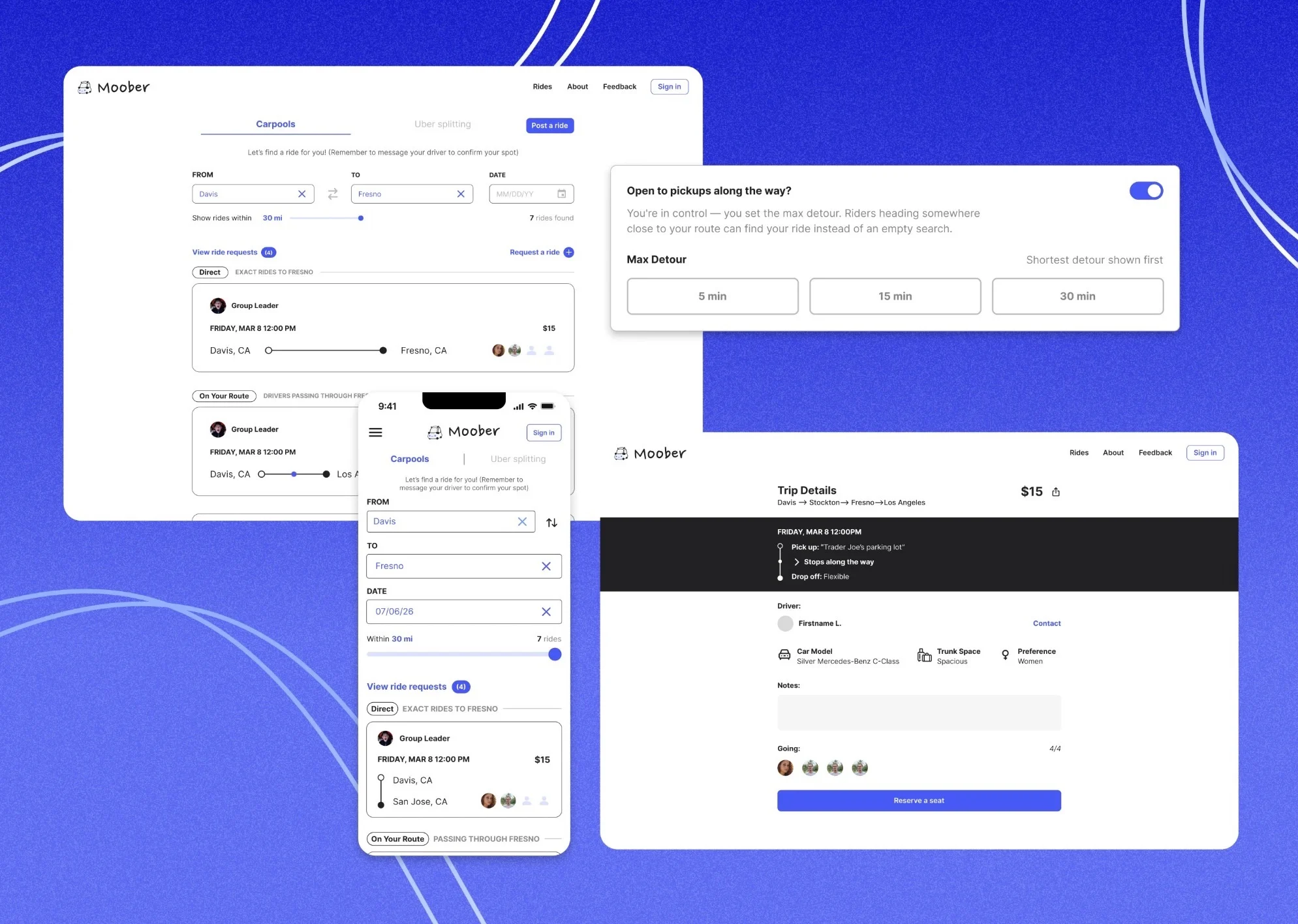
Moober is UC Davis's student-only rideshare, used by 2,000+ students to carpool home or split a ride to the airport. I redesigned the search that matches riders with drivers.
01
44% of rides drove empty while riders searched, saw nothing, and left.
02
Search now follows each driver's whole route and sorts results into three tiers.
03
Designed and handed off to engineering. The feature is now in build.
Solution
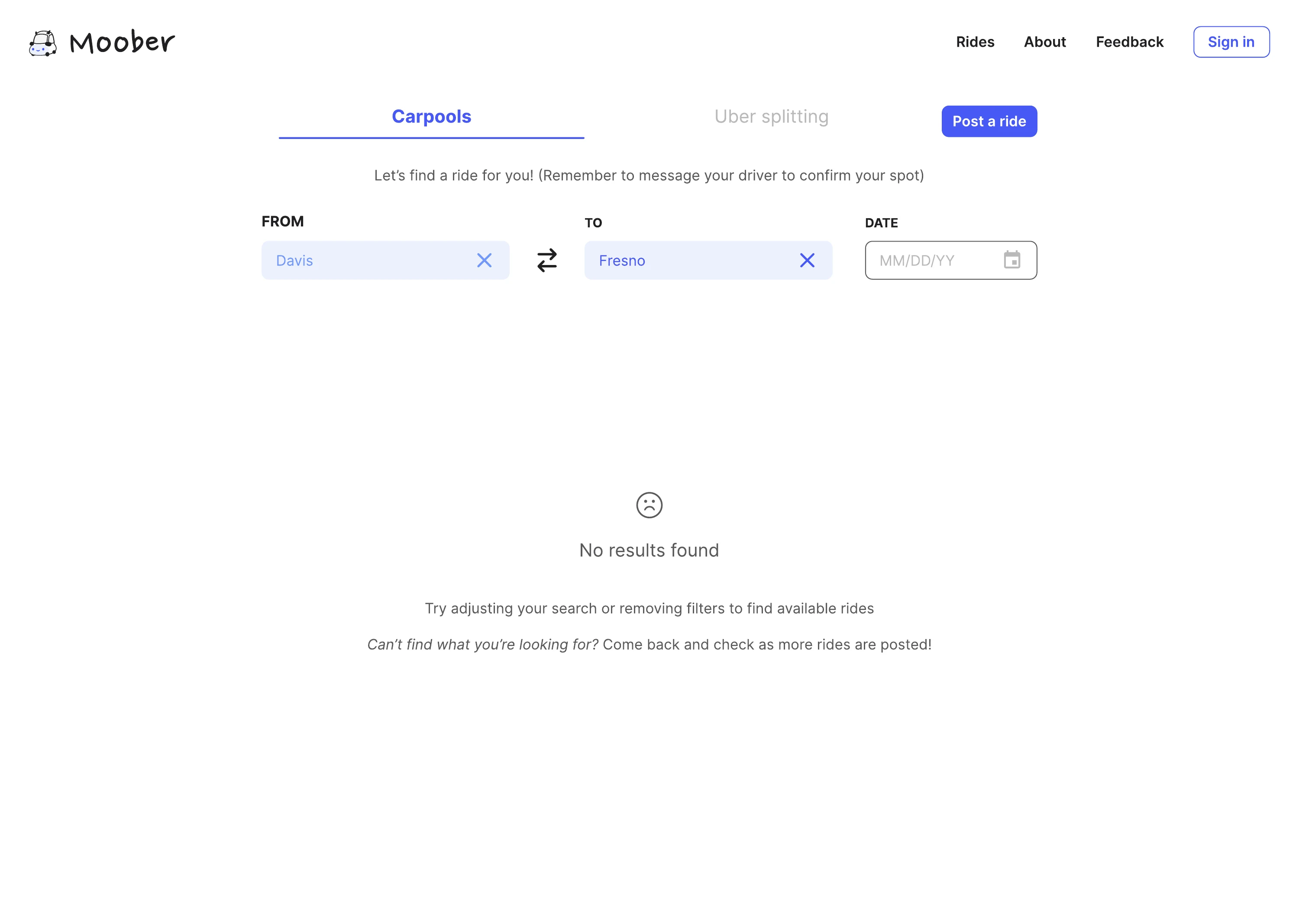
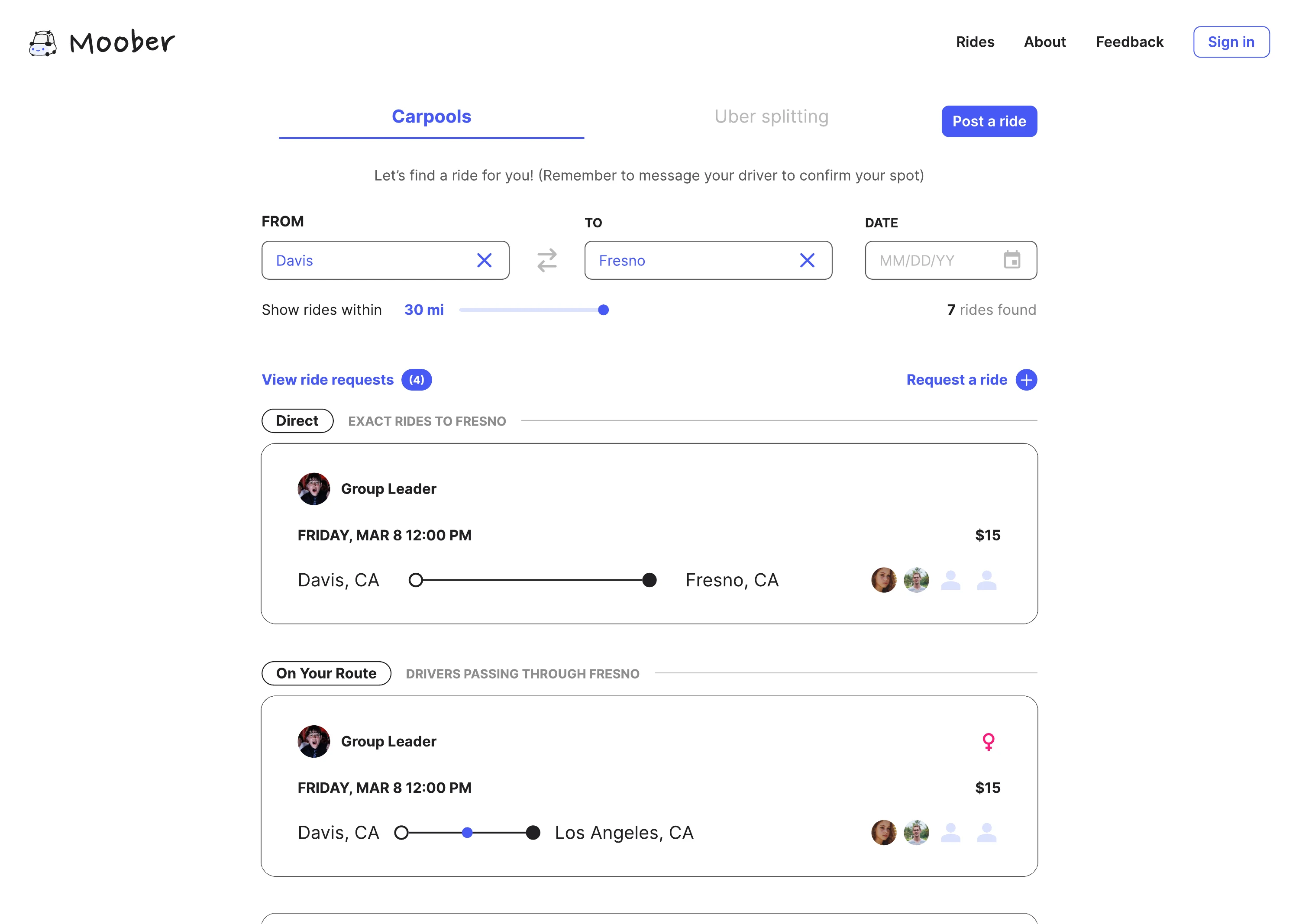
Before Search Fresno. Nothing.
After Same search. Rides along the route, tiered.
Best match first, and every card says plainly what kind of match it is.
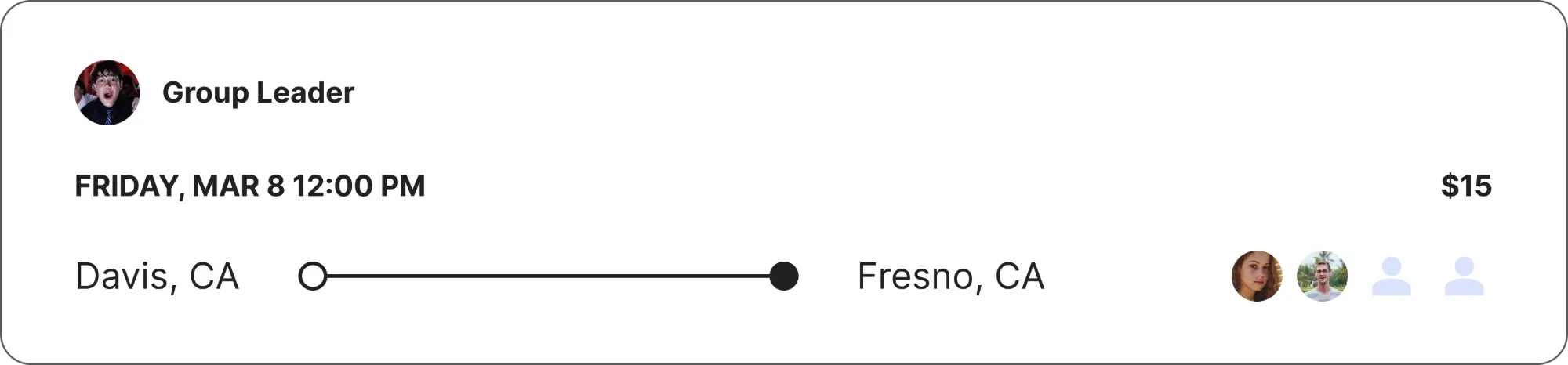
Tier 01
Going exactly where the rider is going. This is all the old search could show.
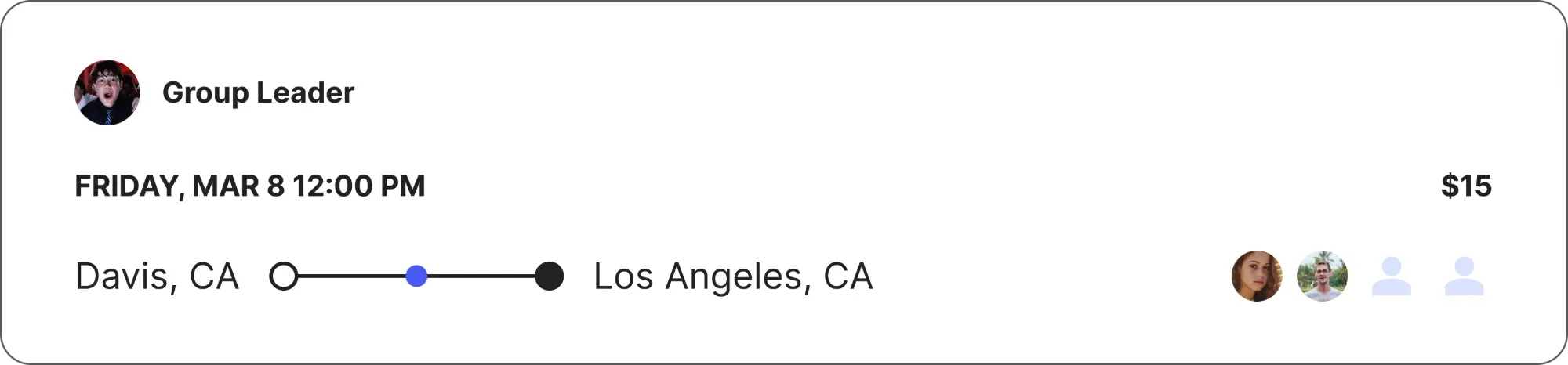
Tier 02
Headed somewhere else, like LA, but passing through Fresno within the driver's detour limit.
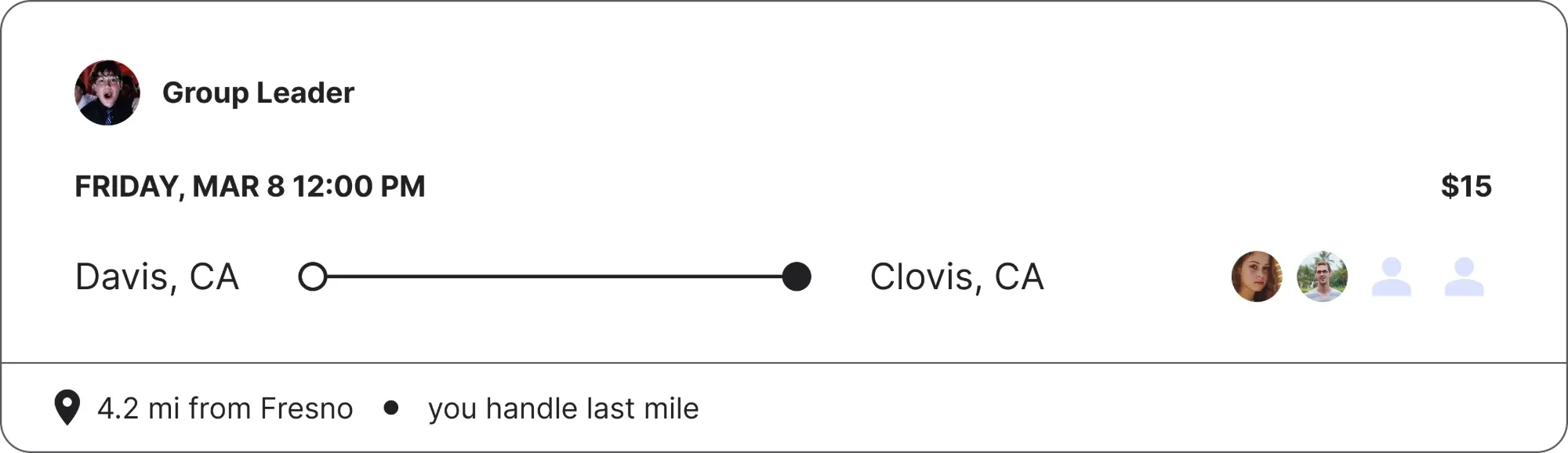
Tier 03
Ends close by, and the card says exactly how far, so the rider decides before booking.
Problem
PostHog, April 2026
44%
of listed rides drove empty, even with plenty of riders on the app.
Search only matched the exact destination city. A driver heading to LA passed right through Fresno, but a rider in Fresno never saw the ride.
We interviewed riders we recruited with a gift card giveaway.
From riders
One student drove to LA to catch a ride that passed through his hometown.
From riders
Another searched once, saw nothing, and assumed the app was dead.
The question
How might we give students more ride options and fill their search results?
Explorations
Dropped
Too imprecise. Close on a map isn't close in traffic.
Dropped
More steps for drivers, and drivers are the supply.
Shipped alongside
Too slow on its own, so it launched next to search to fill the gaps.
How it works
 1234
1234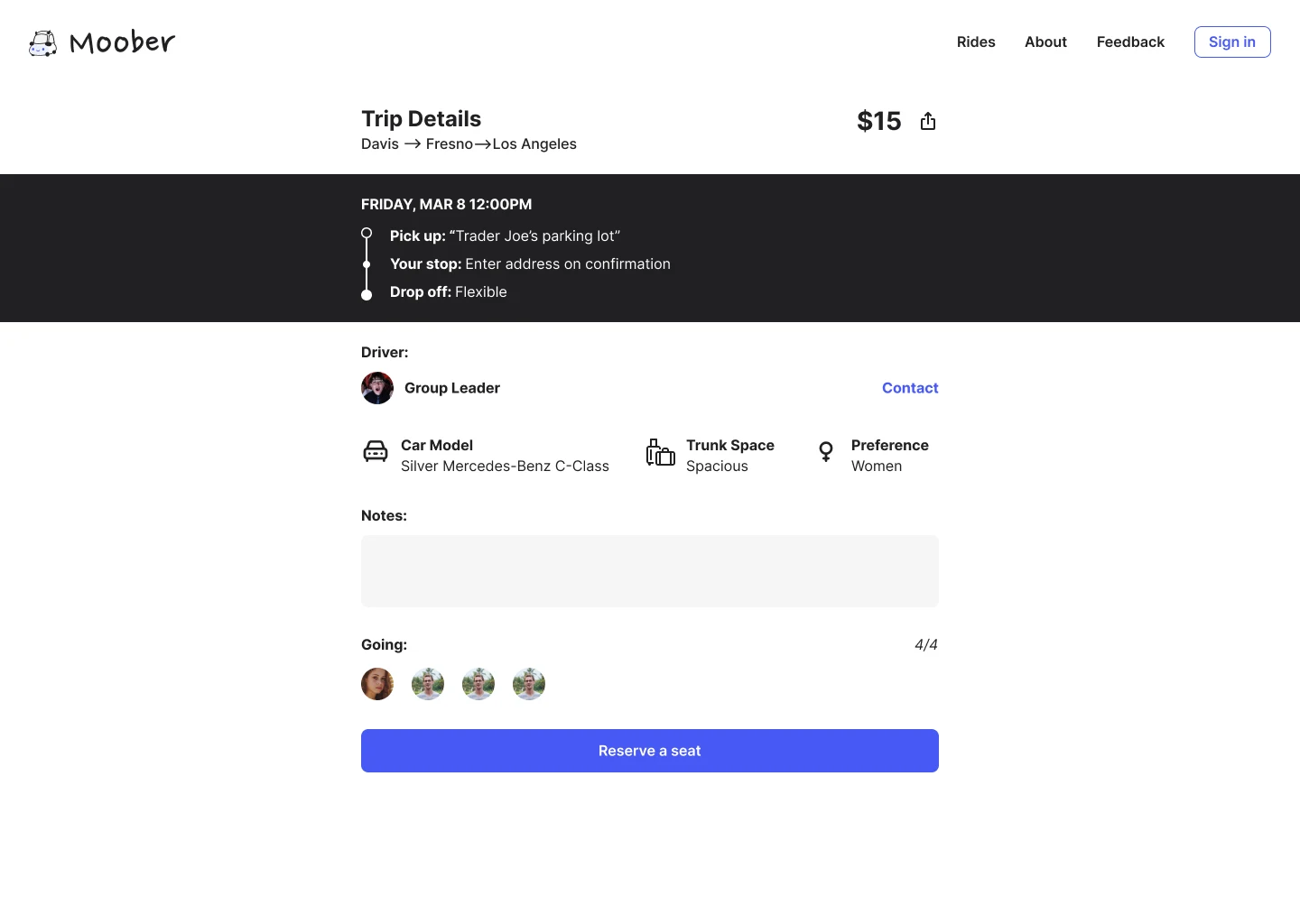
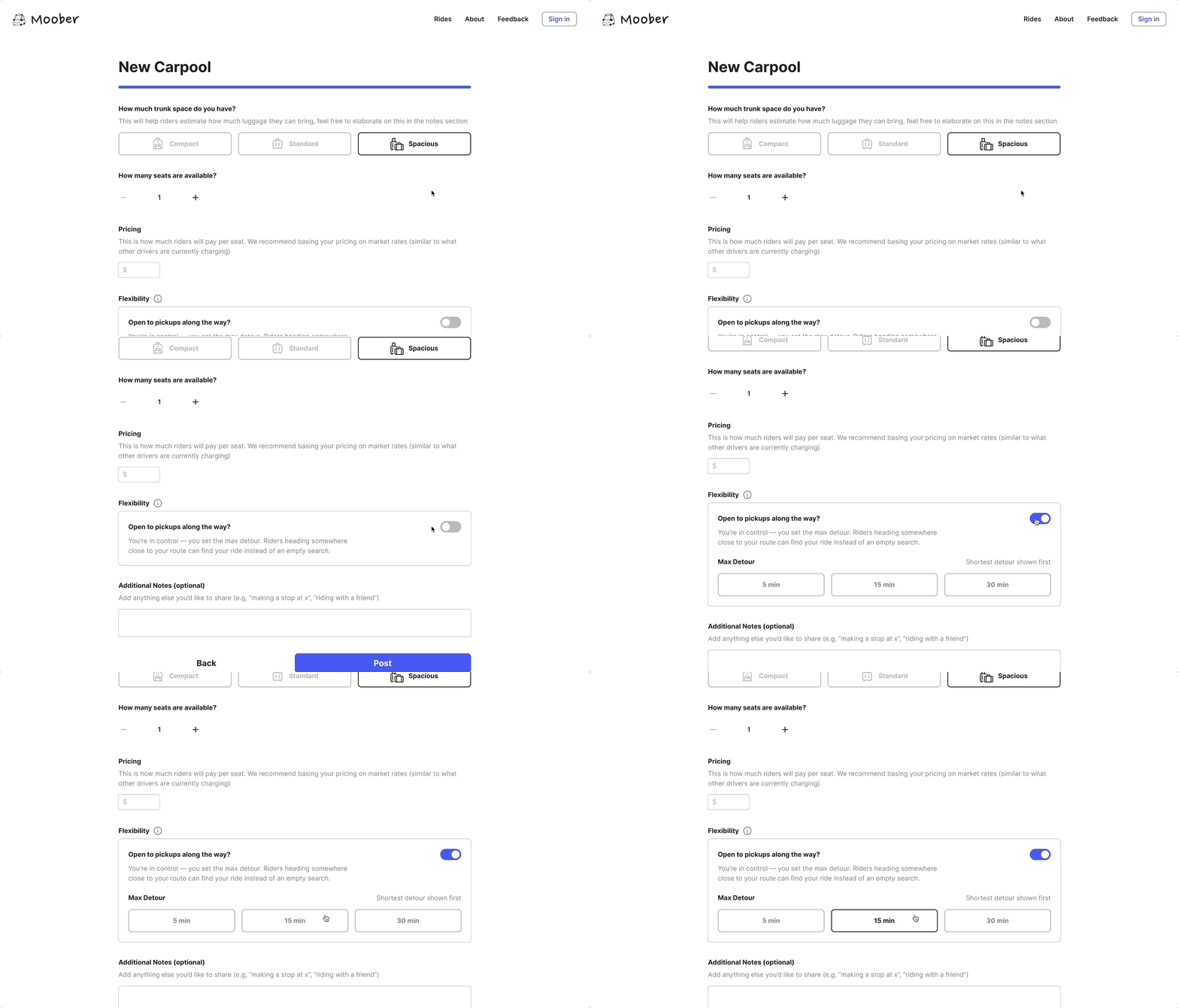
The call
5, 15, or 30 minutes. They carry the cost, so they hold the dial.
Ruled out
They would turn every booking into a negotiation.
The constraint
Only Tier 2 needs the paid map service. The other tiers use free distance math.
Takeaways
Constraints are design material. A limit of 3,000 free map lookups a day, found early with engineering, is the reason the tiers exist.
Honesty is a feature. Showing the mileage gap up front trades a little polish for a lot more trust.
What's next. After launch, I'll watch whether riders who find rides actually book them.
Team
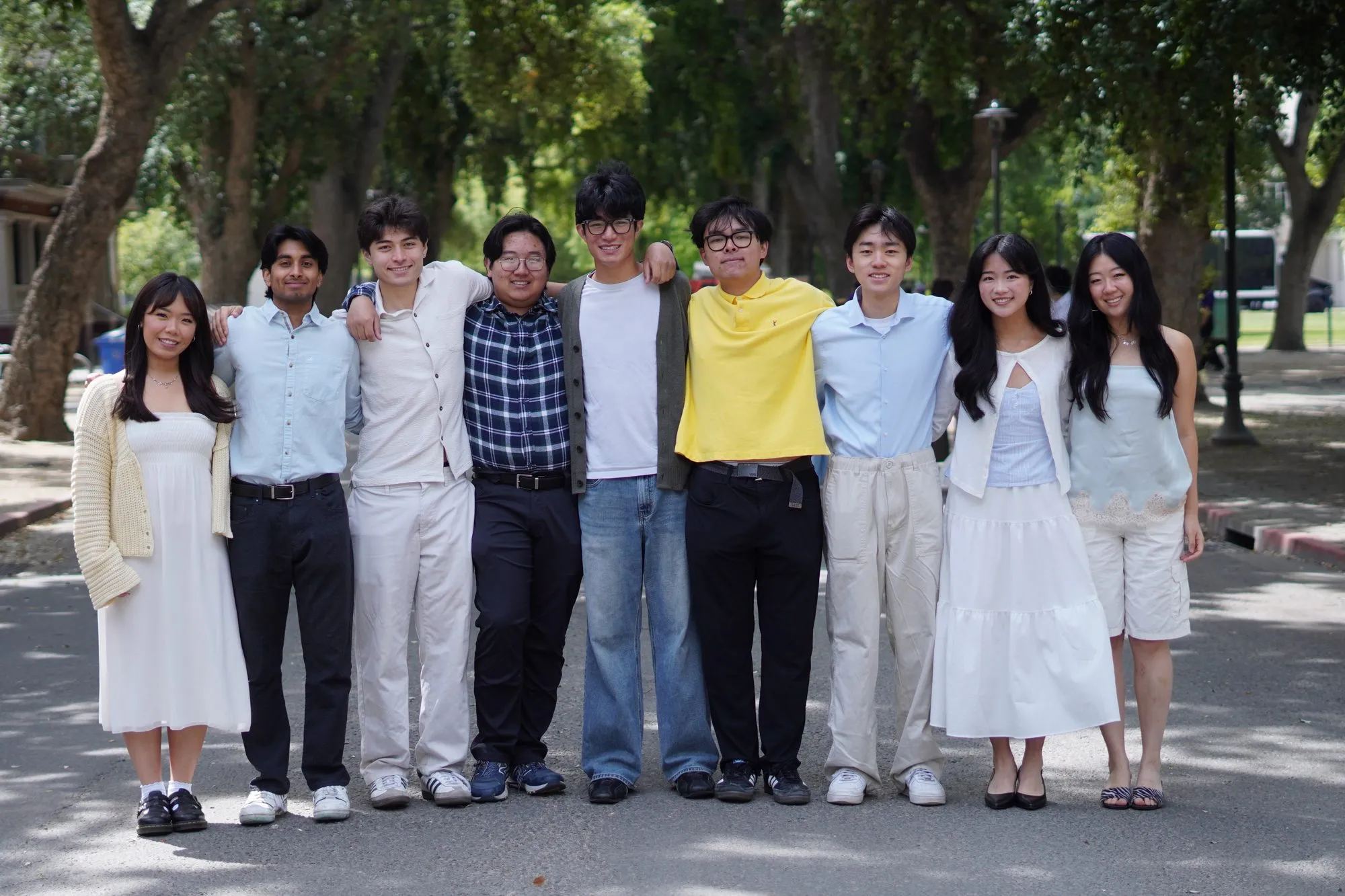
A startup is mostly its people. Ours: the team, a trip to SF, and a thoroughly unserious promo reel.